
Roof Ventilation in the USA
Poor roof ventilation traps heat and moisture in the attic. Summer sun bakes shingles from below while winter allows condensation to soak insulation. Our technicians measure intake and exhaust ratios then add or clear vents to restore balance and protect the roof deck.
Storm season increases wind-driven rain and debris that clog existing vents. We map every soffit, ridge, and gable opening before any work begins. Homeowners first clear debris from exterior vents and check for sagging insulation that blocks airflow at the eaves. For roof ventilation, New Design Roofing works across the USA.
Warning Signs of Blocked or Missing Roof Ventilation
- Attic air feels hot and humid even at night
- Dark streaks appear along the roof ridge
- Ice dams form along eaves after light snow
- Musty odors rise through ceiling registers
- Shingle granules collect in gutters faster than normal
What Our Technicians Measure on Site
Technicians start in the attic with a moisture meter and infrared camera. They record insulation depth, note any compressed batts at the eaves, and calculate the net free area of existing intake and exhaust openings. Readings above seventy-five percent relative humidity trigger immediate recommendations for added ridge or power ventilation.
Exterior checks include soffit slots, fascia returns, and any turbine or static vents. Blocked screens get cleared and measured for proper opening size. Crews also inspect the ridge cap for continuous venting slots that match manufacturer specifications for the roof pitch.
Common Causes We Find During Storm Season
High winds push leaves and pine needles into soffit vents until airflow drops below code minimums. Insulation installers sometimes blow material past the baffles and seal off the intake path. Over time these restrictions force moist air to exit through the shingles instead of the ridge.
Older homes often rely on a single gable vent that cannot exchange air evenly across the full attic. Newer homes with cathedral ceilings need dedicated intake at the perimeter and exhaust at the peak to prevent trapped pockets of warm air that degrade underlayment and fasteners.
Repair and Upgrade Options We Provide
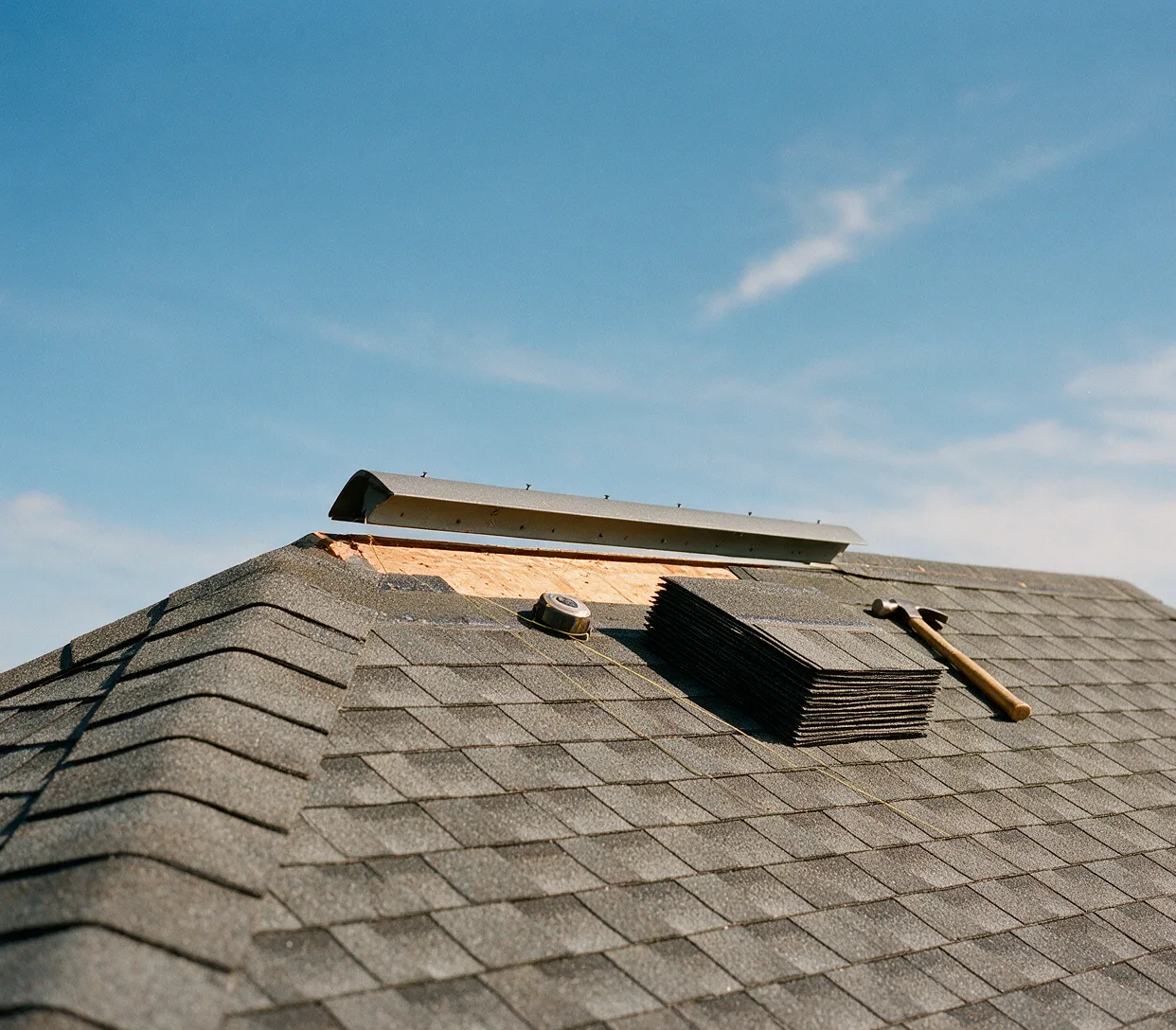
We cut new ridge vents into existing shingles when the cap lacks continuous openings. Each vent section is flashed with manufacturer-approved step flashing and sealed at every nail. For homes without soffit access we add strip vents along the fascia or install eyebrow vents on the lower roof planes.
Turbine vents replace static cans on steep roofs that need active exhaust during calm weather. We also add solar-powered attic fans wired to a thermostat when passive systems cannot move enough air through complex roof shapes. All new components match the existing shingle color and profile.
Materials and Parts Used on Every Job
Ridge vents are aluminum or polymer with external baffles that keep out wind-driven rain. Soffit panels are vented vinyl or aluminum with minimum eight square inches of net free area per linear foot. We carry color-matched flashing, high-temperature sealant, and stainless-steel fasteners rated for coastal exposure.
Baffles are rigid foam or plastic channels nailed between rafters to maintain a two-inch air space above insulation. Turbine bases receive neoprene gaskets before attachment. Every part is selected for the roof slope and expected wind load so the system stays clear through seasonal storms.
Roof Ventilation questions
How do I check my own attic vents before calling for service?
Look inside the attic during daylight and see whether light shows through the ridge or soffits. Feel for moving air near the eaves with a fan running in the house. Note any insulation pushed against the rafters that may block intake slots.
Will adding roof ventilation change my energy bills?
Proper intake and exhaust lowers attic temperatures in summer and reduces moisture that degrades insulation in winter. The roof deck stays cooler so shingles last longer and the house loses less conditioned air through the ceiling.
What parts do you typically replace during a ventilation upgrade?
We often remove clogged ridge caps, add new continuous ridge vents, install vented soffit panels where intake is missing, and place baffles to keep insulation clear of the eaves. All new pieces match the existing roof color.
Can I add vents without tearing off shingles?
Yes. Ridge vents install by removing only the cap shingles along the peak. Soffit vents slide into existing fascia openings or replace small sections of soffit without disturbing the main roof surface.
Schedule Roof Ventilation Service
Our technicians assess your current attic airflow and install the right vents to protect your roof across the USA.