
Metal Roofing in the USA
Metal roofs use interlocking panels that expand and contract with temperature swings. Our technicians measure panel overlap at every seam and check the torque on each fastener to spot early movement before wind lifts an edge.
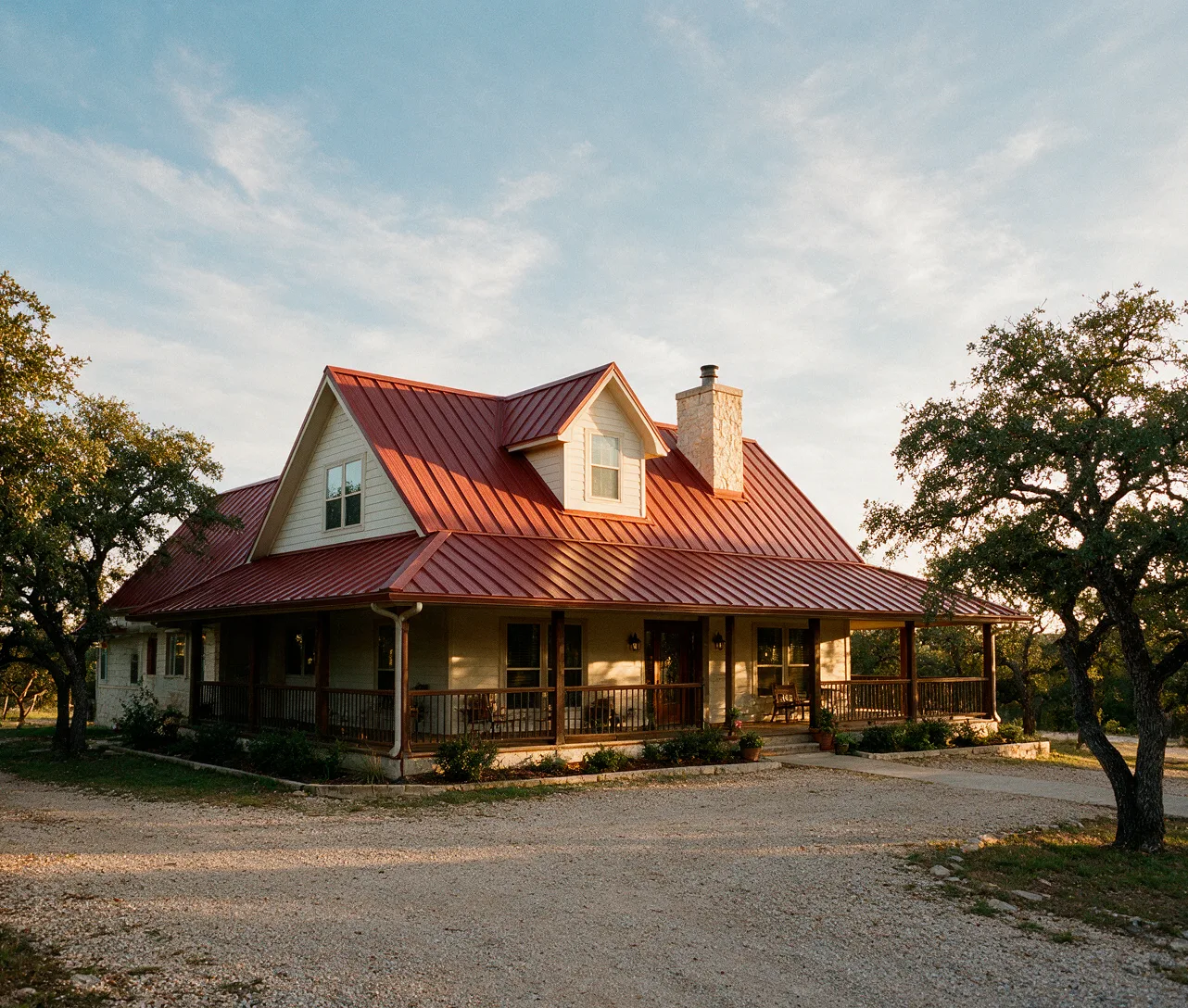
Standing seam profiles create a raised channel that channels water away from screw heads. We examine the factory-applied coating for chalking or micro-cracks that let moisture reach the steel base during repeated freeze-thaw cycles. Metal roofing is part of what New Design Roofing does across the USA.
Visible Clues That Metal Panels Need Attention
- Rust streaks forming below fastener heads after rain.
- Panels that rattle or lift slightly during gusty winds.
- Dents from hail that break the protective coating layer.
- Water stains on interior ceilings near roof edges.
- Gaps where flashing meets wall or chimney surfaces.
What Our Technicians Measure During Metal Roof Checks
Technicians start at the ridge and work downward, recording the distance between each standing seam with a tape measure. They also use a torque wrench on exposed screws to verify they still meet the original installation specification. Any panel that shows more than a quarter-inch of movement gets flagged for immediate resealing.
Next they inspect the eave and rake trim for proper drip edge clearance. Leaves or pine needles trapped under the metal can hold moisture against the underlayment, so crews clear those spots and note whether the synthetic underlayment has begun to wrinkle or tear.
Repair Steps for Damaged Metal Panels
When a single panel dents from hail, crews remove only that sheet by backing out the concealed fasteners. They slide in a new panel of matching gauge and profile, then re-crimp the seams with a hand seamer to restore the original water-tight lock. No full roof removal is required.
For seam leaks, technicians clean the joint with a wire brush, apply a compatible butyl tape, and install a new metal closure strip. They then run a bead of high-movement sealant along the edge and test the repair with a garden hose before leaving the site.
Material Choices for New Metal Roofing
We stock 24-gauge Galvalume panels with a PVDF finish in several colors. The coating resists chalking for decades even under intense sunlight. Homeowners can choose between 1-inch and 1.5-inch seam heights depending on the roof slope and expected snow load.
For areas with heavy tree cover we recommend screw-down corrugated panels with a heavier galvanized coating. These install faster over existing shingles when the deck is sound, and the extra ribs add stiffness against foot traffic during future inspections.
First Steps Homeowners Can Take Before Crew Arrival
Walk around the house and note any panels that appear darker from ground level; those spots often indicate coating loss. Photograph the locations and send the images to us so we can bring matching replacement sheets on the first visit.
Clear gutters and downspouts of debris so water flows freely during the inspection. Standing water at the eave can mask small seam issues until a storm arrives, so removing leaves now gives a clearer picture of actual roof condition.
Metal Roofing questions
How long does a typical metal panel repair take?
Most single-panel replacements finish in under two hours once the crew reaches the roof. Larger seam repairs may require an additional visit to apply the final crimp after the sealant cures, but the structure stays protected overnight with temporary tape.
Can metal roofing be installed over existing shingles?
Yes, when the deck is flat and dry. Our technicians first confirm the existing shingles lie flat and that no moisture is trapped. They then install furring strips to create airflow, lay new synthetic underlayment, and fasten the metal panels directly to the strips.
What causes fasteners to back out on metal roofs?
Daily temperature changes make panels expand and contract. If the original installer used screws without proper washers or set them at the wrong angle, the constant movement gradually loosens them. We re-torque every fastener during annual checks to catch this early.
Do metal roofs need special ventilation?
Metal sheds heat quickly, so ridge and eave vents must remain clear. We measure existing vent openings and add extra intake if soffits are blocked. Proper airflow prevents condensation under the panels that can wet the deck from the inside.
Schedule Metal Roofing Service
Contact New Design Roofing today to schedule a metal roof inspection across the USA.