
Roof Leak Repair in the USA
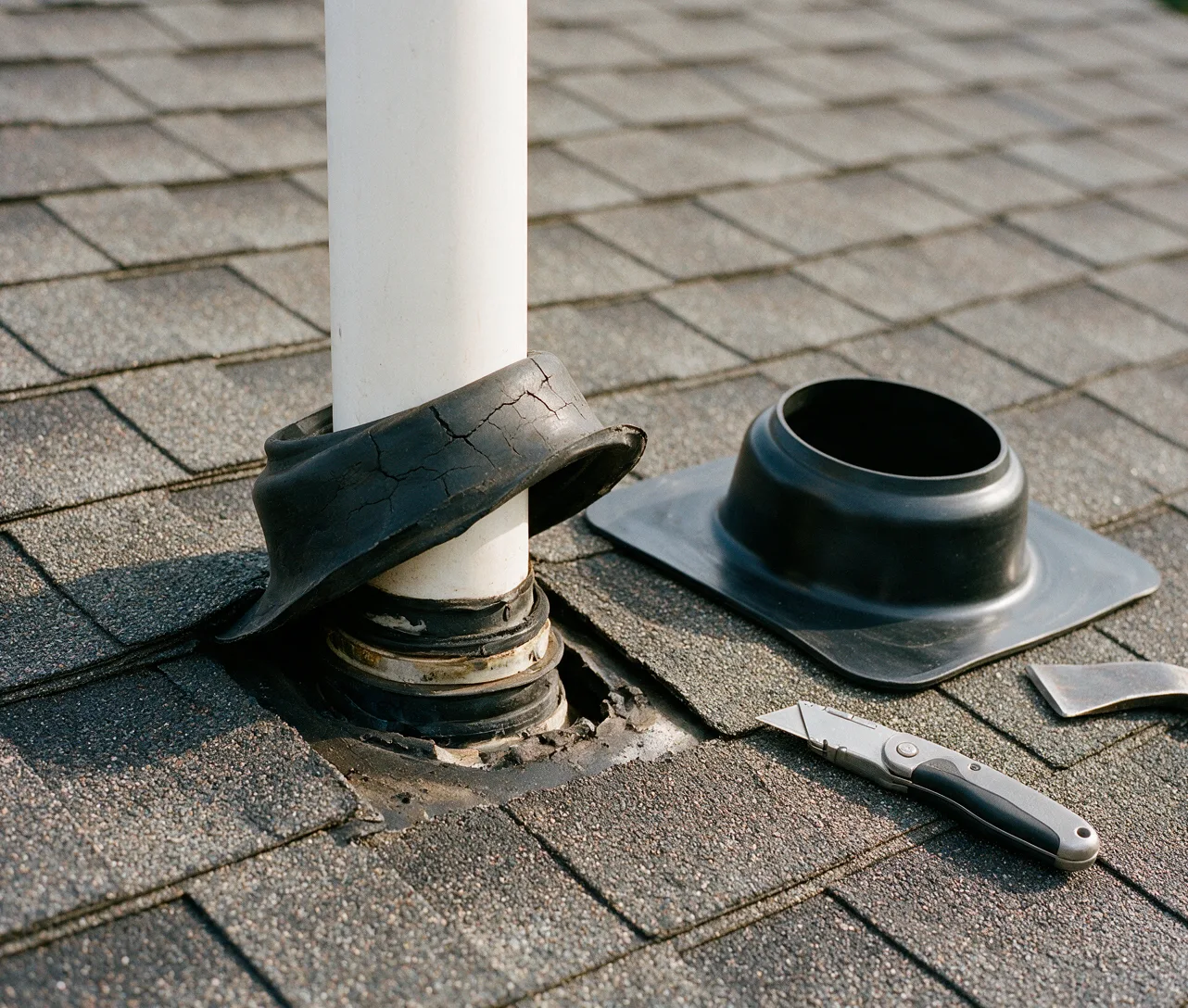
Roof leaks often start at failed flashing around vents or chimneys after high winds lift edges or hail cracks granules. Our technicians trace water paths from the exterior down to the decking, noting any soft spots or mold on sheathing before deciding on a patch or full section replacement.
Homeowners can safely scan the attic with a flashlight during daylight for dark stains or dripping, then place buckets under active drips and move stored items away from the area. This buys time until our crew arrives with the right tools and materials. New Design Roofing covers roof leak repair jobs in the USA.
Early Warning Signs
- Dark water rings appear on ceiling drywall near light fixtures.
- Musty odor grows stronger in upstairs closets after rain.
- Shingles curl or granules collect in gutters after storms.
- Drips echo from attic rafters during heavy downpours.
- Paint bubbles along exterior walls where roof meets siding.
Inspection Steps Our Technicians Follow
We start at the ridge and work downward, checking every vent boot, step flashing, and valley for gaps or rust. A moisture meter reads decking levels while infrared scans reveal hidden wet insulation behind the ceiling. Measurements of slope and overhang determine whether a simple sealant or new underlayment strip will hold.
Next we lift select shingles to inspect felt or synthetic underlayment for tears. Any nail pops or pulled staples get logged because they create future entry points. The crew notes wind direction from the latest storm to focus on the most exposed slope first.
Finally we measure the distance from leak stains to the nearest ridge or eave. This tells us exactly how far water traveled and whether ridge vent mesh needs cleaning or replacement to restore airflow.
Repair Choices We Offer
For small punctures we cut out the damaged shingle, slide in new felt, and nail a matching replacement with four galvanized nails. Larger areas receive a full course of new underlayment plus ice-and-water membrane along the valley before shingles go back down.
Flashing repairs use pre-formed aluminum or copper pieces bedded in roofing cement. We remove old caulk, clean the metal, and fasten the new piece so water sheds over the top edge rather than behind it.
When decking is soft we remove the affected plywood section, install new sheathing to match thickness, then cover with synthetic underlayment rated for high-wind zones before finishing with shingles.
Materials and Parts We Carry
Our trucks stock 30-pound felt, self-adhering membrane, and color-matched shingles in both three-tab and architectural profiles. We also carry aluminum step flashing, vent boots in multiple diameters, and stainless-steel screws that resist rust better than standard nails.
Sealants include asphalt-based plastic cement and high-grade polyurethane caulk rated for extreme temperature swings. Ridge vent replacement pieces come with integrated bug screen to keep out debris while allowing airflow.
For metal roof leaks we carry butyl tape, rivets, and matching paint pens so repairs blend after the fix. Every material is chosen to match the existing roof slope and exposure rating.
Storm Season Steps Homeowners Can Take
After high winds, walk the yard and note any branches that landed on the roof. Photograph missing or lifted shingles from the ground so our crew knows which slope to check first. Keep gutters clear so water does not back up under the first course.
Inside, run a dehumidifier in the attic after any leak to reduce moisture on wood. Avoid taping plastic over ceiling stains because trapped humidity can worsen mold growth behind the drywall.
Track rainfall amounts in a notebook. When two inches fall and no new stains appear, the current repair is holding. This record helps us decide whether the rest of the roof needs closer attention during the next visit.
Roof Leak Repair questions
How do you find the exact leak source?
Our technicians use moisture meters, infrared cameras, and a systematic top-down inspection to follow water trails from entry point to interior stain. Every measurement is recorded so the repair targets the real problem instead of guessing.
Can a small leak wait until next season?
Even a pinhead drip can rot decking and insulation within weeks. We recommend scheduling Roof Leak Repair as soon as stains appear so the fix stays small and the structure stays dry through the next storm cycle.
What happens if flashing is the culprit?
We remove the old flashing, clean the substrate, and install new step or counter flashing with proper overlap. Roofing cement seals the top edge so water sheds outward instead of running behind the metal into the attic.
Do you replace underlayment during a leak fix?
When we lift shingles we check the felt or synthetic layer for tears. If damage is present we replace the section with new underlayment and ice-and-water shield before reinstalling shingles to prevent repeat leaks.
Book Roof Leak Repair
Contact New Design Roofing today so our technicians can stop the water and protect your home before the next storm.