
About New Design Roofing
We answer calls by asking about recent storms, visible leaks, and attic signs of moisture. Our technicians arrive with ladders and basic tools to check every slope and edge. They note lifted shingles, torn flashing, and clogged vents that let water enter. After the walk-through they describe each issue and the steps needed to stop further damage. Work ends only after debris is cleared and the property looks as it did before arrival.
Questions about a job? Start on the New Design Roofing homepage or call (888) 278-7137.
Direct Call Answers
We gather storm details and schedule visits without passing callers between departments.
Full Slope Checks
Technicians examine every plane, edge, and vent for hidden wind and water entry points.
On-Site Explanations
Findings are shown and described before any repair work begins on the roof.
Clean Site Finish
All debris, nails, and packaging are removed so the property matches its earlier condition.
Taking the Initial Call
When a homeowner describes wind damage or interior water spots we ask about the storm direction and which roof planes faced the strongest gusts. This guides our technicians to start their inspection on the most exposed slopes rather than guessing. We also note any recent attic smells or ceiling stains so the crew knows to check corresponding rafter bays first.
Homeowners can safely walk their yard and point out fallen branches or displaced shingles from the ground. Our team records those details to bring matching replacement bundles and underlayment patches. The call ends with a time window so the crew can stage materials without extra trips.
Arriving and Starting the Inspection
Technicians begin at the lowest edge and work upward, looking for cracked tabs, missing granules, and nail pops that indicate deck movement. They lift a few shingles on each plane to inspect underlayment tears and felt condition without removing whole sections. Attic access follows if the homeowner has a pull-down stair, allowing checks for wet insulation and mold streaks along the sheathing.
Gutter interiors are cleared during the same pass so water flow tests can show whether downspouts still drain properly after repair. Any soft spots in decking are marked with chalk so the homeowner sees exactly where replacement boards will go. The process stays visible from the ground whenever possible.
Reviewing What We Find
Each marked area gets a short explanation of how the damage occurred, such as wind catching a raised edge and pulling nails free. We point out how one missing shingle now channels water under the course above it and why that path must be sealed. Homeowners receive a simple list of immediate fixes versus items that can wait until the next season.
Vent boots and pipe collars receive separate attention because they often crack from UV exposure long before storm season. We show the homeowner the brittle rubber and explain how a new collar stops the drip that appears only during heavy rain. No work starts until the list is confirmed.
Wrapping Up the Work
After shingles and flashing are replaced, technicians sweep granules and nails from every gutter and downspout. They run a hose test on repaired slopes while the homeowner watches from the yard to confirm no new drips appear. Final photos are taken of each fixed section for the homeowner's records.
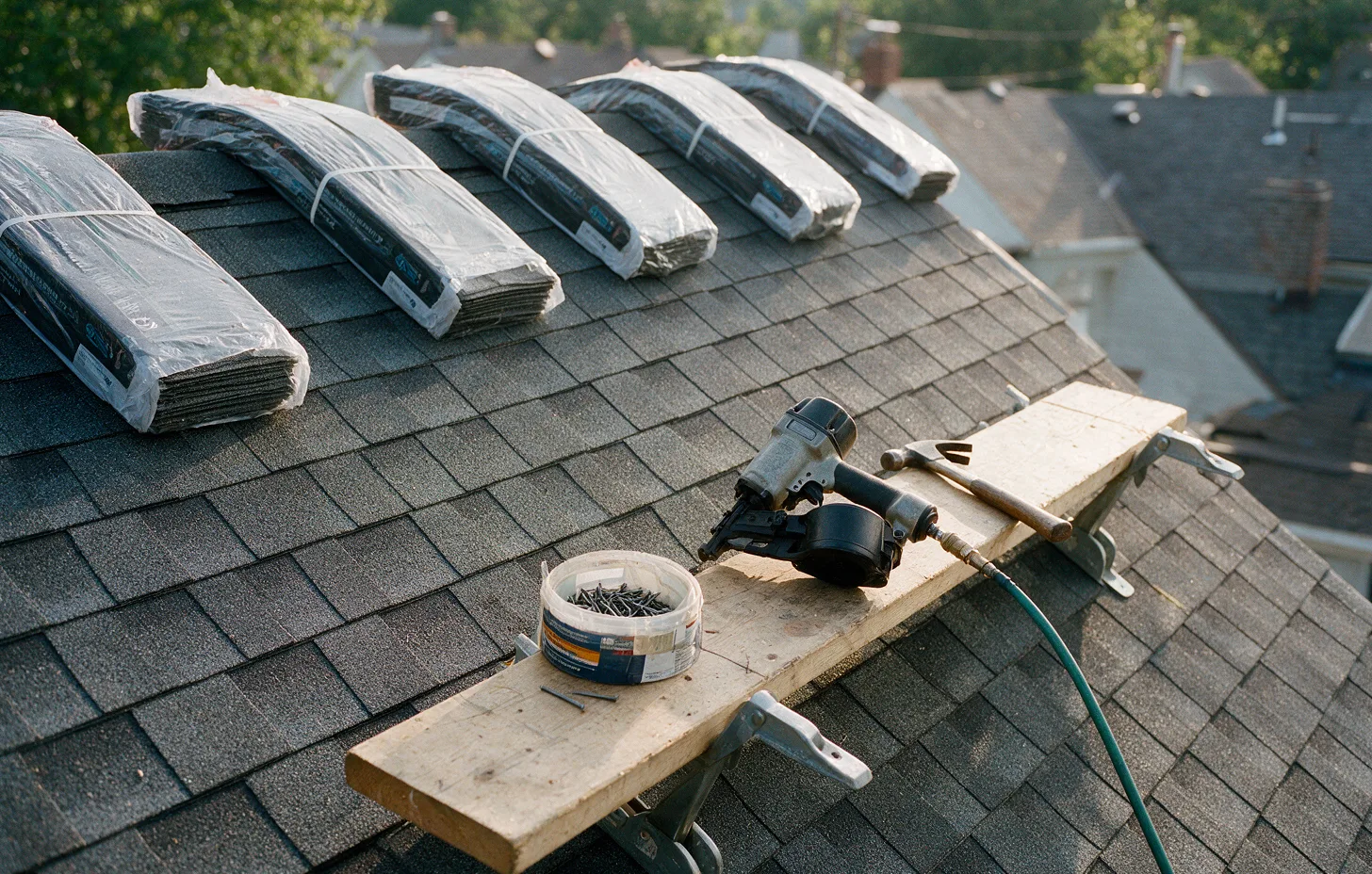
All leftover bundles and tools leave with the crew so the driveway stays clear. We point out the exact spots that received new material so future inspections can focus there. The job finishes when the property matches its pre-storm appearance from the street.