
Roof Replacement in the USA
Storm seasons bring high winds and hail that crack shingles and loosen fasteners across entire roof planes. New Design Roofing replaces full systems when damage reaches the deck or when multiple layers already exist. Our technicians start by counting layers and checking for soft spots that signal rot below the surface.
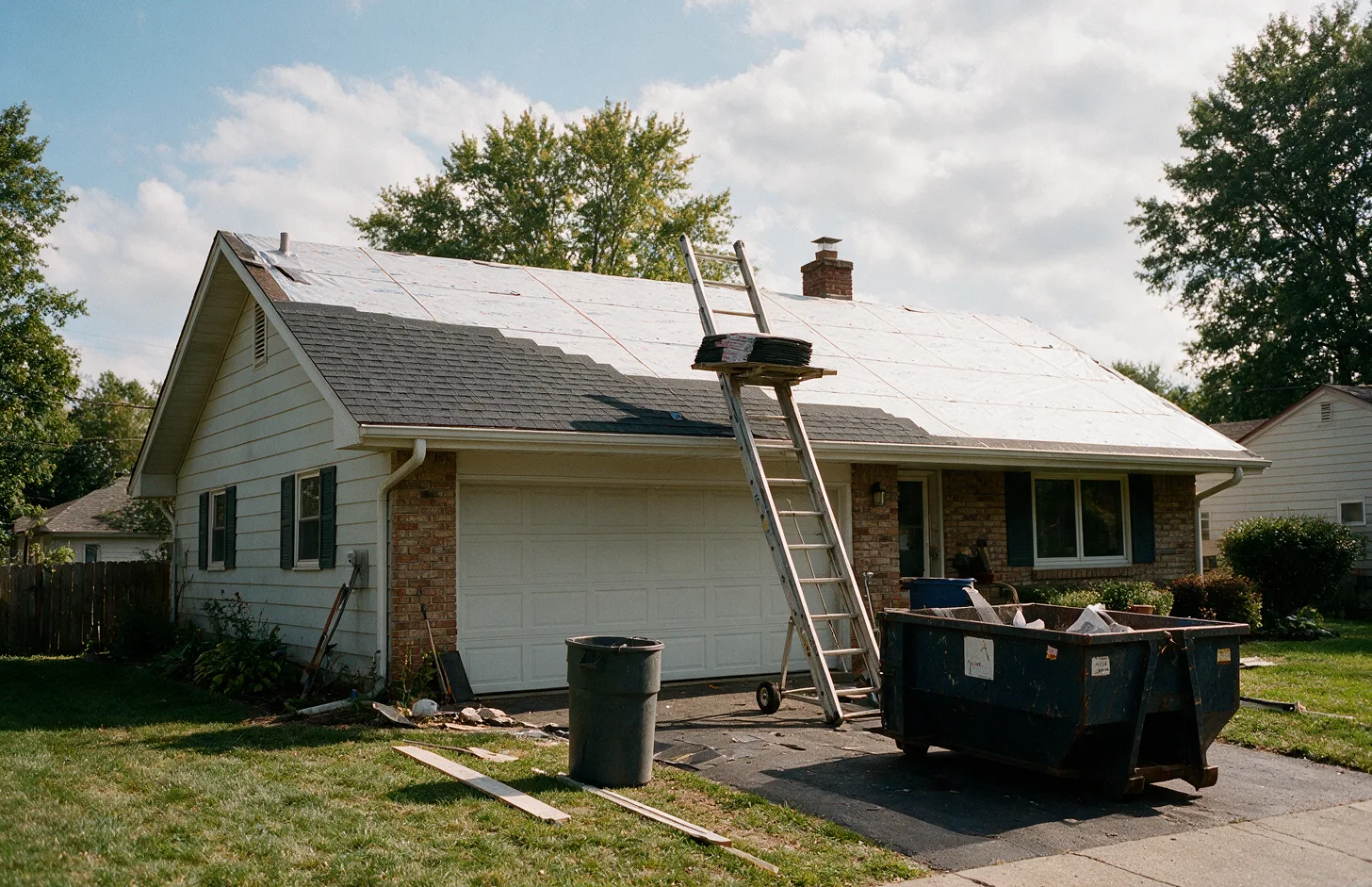
Replacement begins with complete tear-off to expose the deck for inspection. We measure rafter spacing and note any sagging before installing new underlayment and roofing. Proper flashing around vents and valleys gets reset to prevent water entry at seams that old roofs often miss. New Design Roofing schedules roof replacement visits throughout the USA.
Warning Signs Replacement Is Needed
- Shingles curl or buckle across multiple slopes after storms.
- Daylight appears through attic boards during daylight checks.
- Water stains spread on ceilings below roof valleys.
- Three or more layers of roofing already cover the deck.
- Granules fill gutters after every heavy rain event.
Deck and Framing Assessment
Our technicians walk every slope and probe deck boards with a screwdriver to locate rot. They measure rafter spans and note where sistering or sister boards may be required before new sheathing goes down. Soft spots get marked so replacement plywood can be cut to fit exact dimensions.
Ridge beams and collar ties receive close checks for separation caused by wind uplift. Any movement here means temporary bracing before work starts. Homeowners can safely walk the attic and shine a flashlight along the deck underside to spot dark streaks that indicate ongoing moisture.
Layer Removal and Preparation
Complete tear-off removes all existing shingles, felt, and flashing down to the deck. This step reveals hidden nail pops and previous patch repairs that could telegraph through new roofing. Debris gets removed from the property before the crew leaves so the work area stays clear.
Ice and water shield gets applied along eaves and in valleys per local exposure needs. New drip edge follows the perimeter to direct water away from fascia boards. Homeowners should move vehicles and outdoor furniture away from the house perimeter before crews arrive.
Material and Ventilation Choices
Architectural shingles or metal panels are selected based on roof pitch and expected wind loads. Ridge vents replace old static vents to improve airflow and reduce attic heat buildup. Intake vents at the soffits stay open and unobstructed during the job.
Color selection focuses on solar reflectance so the new roof stays cooler during summer months. Synthetic underlayment goes down first for added tear resistance during installation. Technicians verify that new ventilation matches the square footage of the attic space.
Final Walk and Storm Readiness
After installation our technicians walk the finished roof to confirm every nail is sealed and every seam overlaps correctly. They check that step flashing integrates with siding and that pipe boots sit flat against shingles. Photos of each slope get taken for the homeowner record.
Gutter guards are reinstalled or adjusted so leaves do not block new drainage paths. Homeowners can test downspouts with a hose to confirm water flows freely away from the foundation. Any loose debris on the ground gets cleared before the crew leaves the site.
Roof Replacement questions
How long does a full roof replacement take?
A typical replacement on a single story home finishes in two to four days once tear-off begins. Weather delays can extend the schedule when high winds or rain interrupt work. Our technicians cover the deck each evening with tarps to protect the interior.
Can new roofing go over old shingles?
We remove all existing layers to inspect the deck and eliminate hidden leaks. Overlaying adds weight and hides damage that later causes callbacks. Full tear-off gives the clean surface needed for proper underlayment adhesion.
What ventilation work happens during replacement?
Ridge vents are cut into the peak after old roofing is removed. Soffit intake areas are cleared and new vent material added if gaps were previously blocked. Balanced airflow keeps the attic dry and reduces ice dam risk in cold months.
How do I prepare the house before crews start?
Move vehicles and grills at least twenty feet from the house. Trim branches that touch the roof edges. Shut windows on upper floors so dust does not enter living spaces. These steps keep the job site clear for equipment placement.
Schedule Roof Replacement
Contact New Design Roofing to assess storm damage and plan a full roof replacement that fits your home.